
Fritillaria Hat (a knitting recipe)
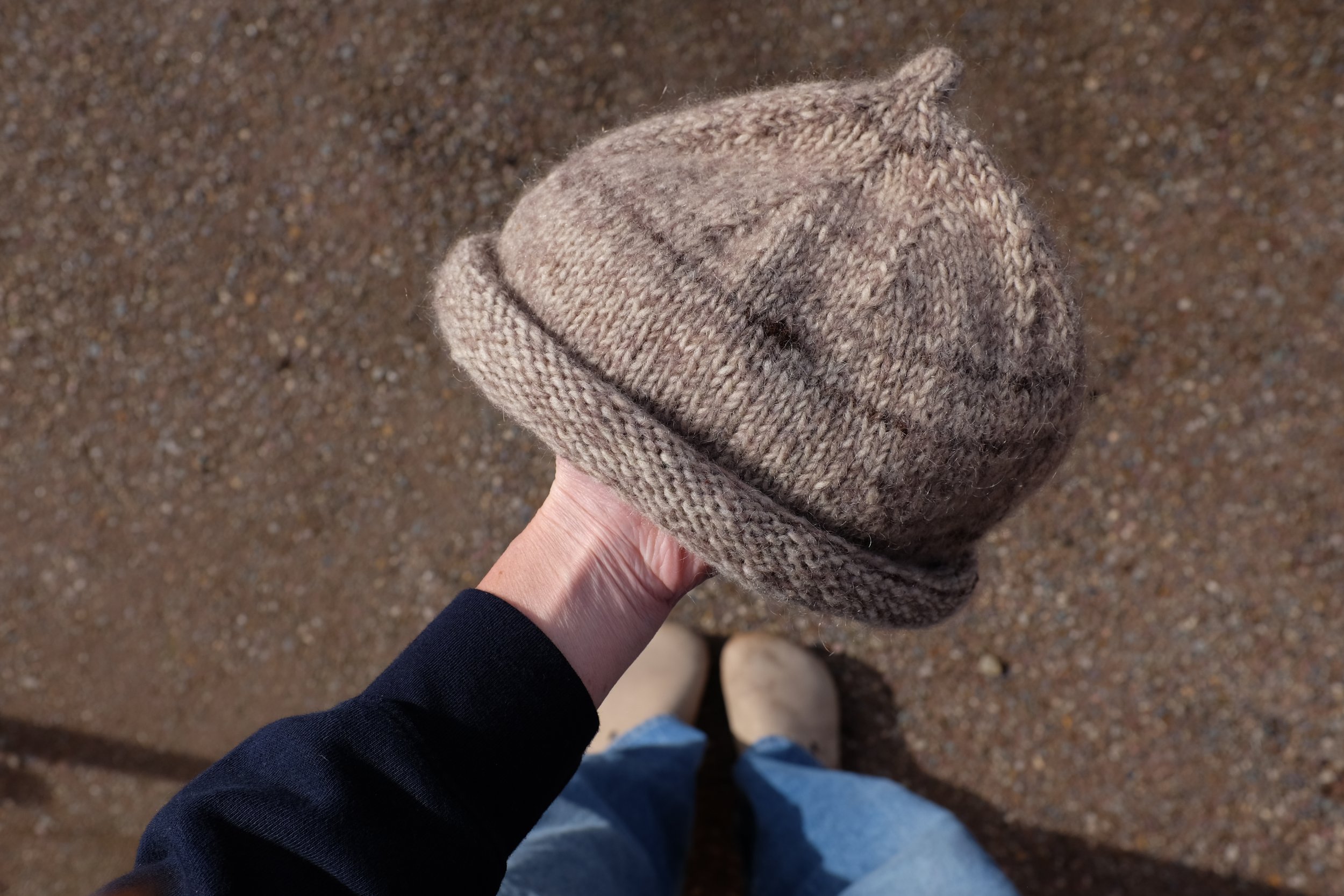
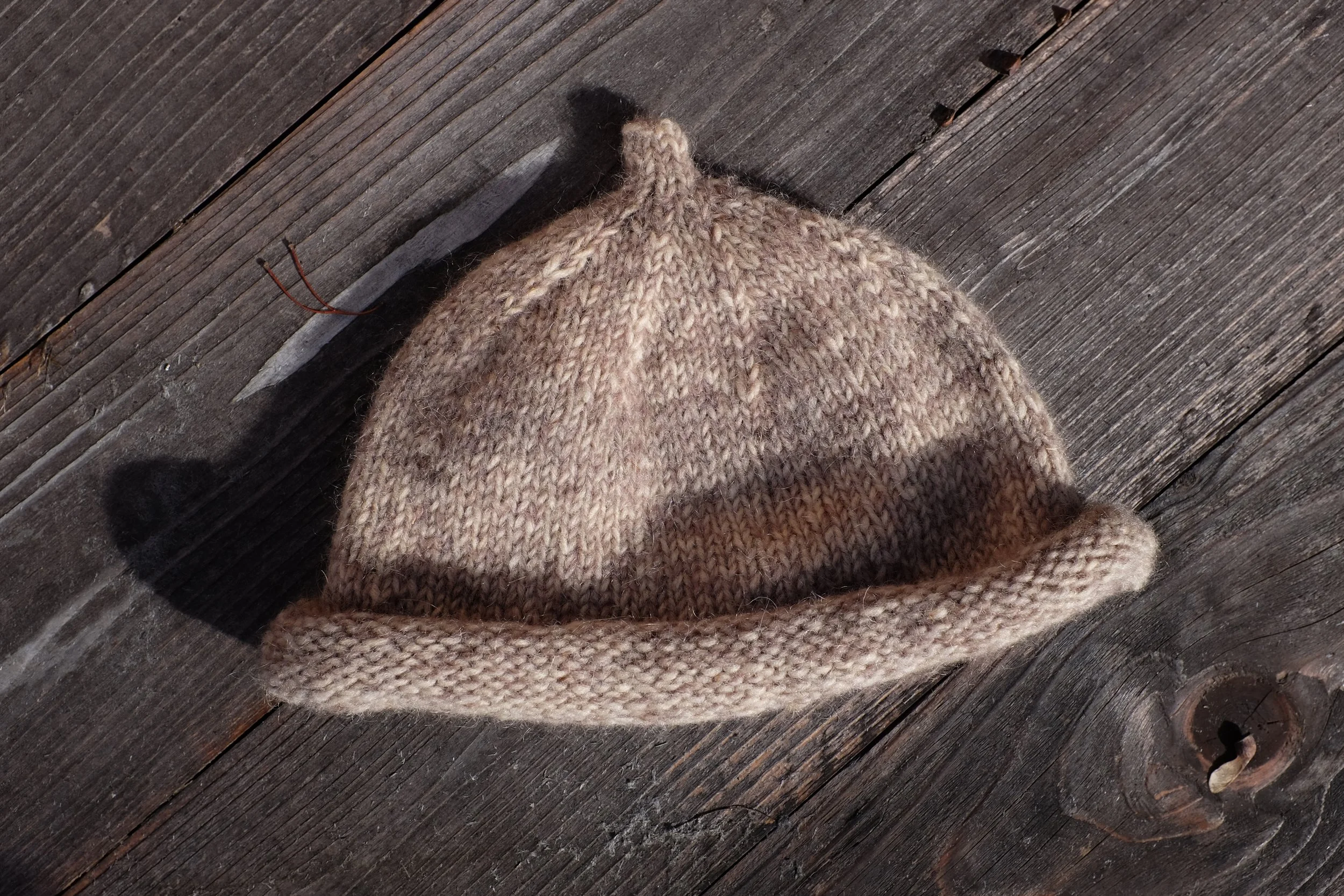
A hat that will ride the shoulder season into spring. This is an easy bottom up pattern that just about any knitter can handle with some simple decreases at the crown and a couple mini repeats for the sprout. Stockinette stitch makes for a slim mid-weight fabric and makes it a great hat to slosh through the spring thaw. The roll brim makes it easy to adjust the height of the hat to its owner. Wear it long on cold mornings or over the ears once the bulbs have popped out of the ground and you want to lean in for a listen.
These knitting instructions are available as a digital download here if you would like to keep a proper pattern in your library.
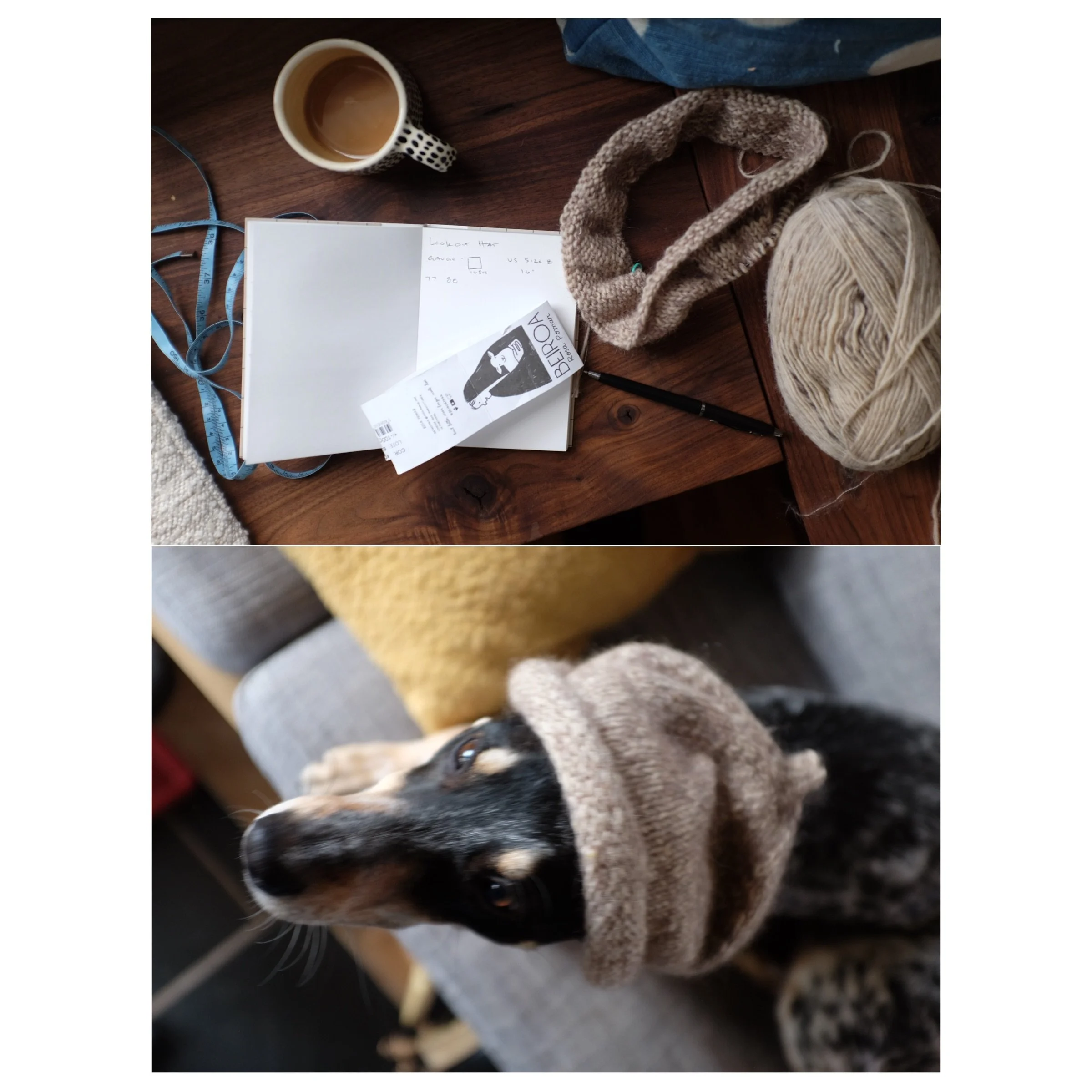
What you’ll need:
US size 8 circular needles (16”) (or needle size required to achieve gauge)
US size 8 DPNs (or needle size required to achieve gauge)
DK/ light worsted (3/light)
(hat in photo is knit with Beiroa col. 409 by Retosaria 251 yards / 230 meters [100 grams})
Optional: lace weight yarn to hold along with worsted yarn (hat in photo is knit with Sandnes Garn Tyn Silk Mohair in Hazelnut)
Stitch markers
Measuring tape
Tapestry needle
Note: DPNs are not required if you are using the Magic Loop method.
Fit notes:
This hat is designed to have a little stretch, but the nature of stockinette stitch is not as stretchy as ribbed fabric. It is a lighter weight yarn knit with larger needles to maintain the integrity of the fabric. The yarn used on a US size 8 needle makes a hat that will fit a medium adult noggin, or about 21.5”-23” in circumference. You can always make a smaller or larger hat, but make sure to keep the number of stitches you cast on at the beginning a multiple of 11. For example, the standard medium hat begins with a cast on of 88 stitches, so if you wanted a smaller hat you would cast on 77 instead.
Gauge:
For those knitters who like to do a gauge swatch, you should end up with a 4” x 4” swatch that yields roughly 16-19 stitches by 24-25 rows.
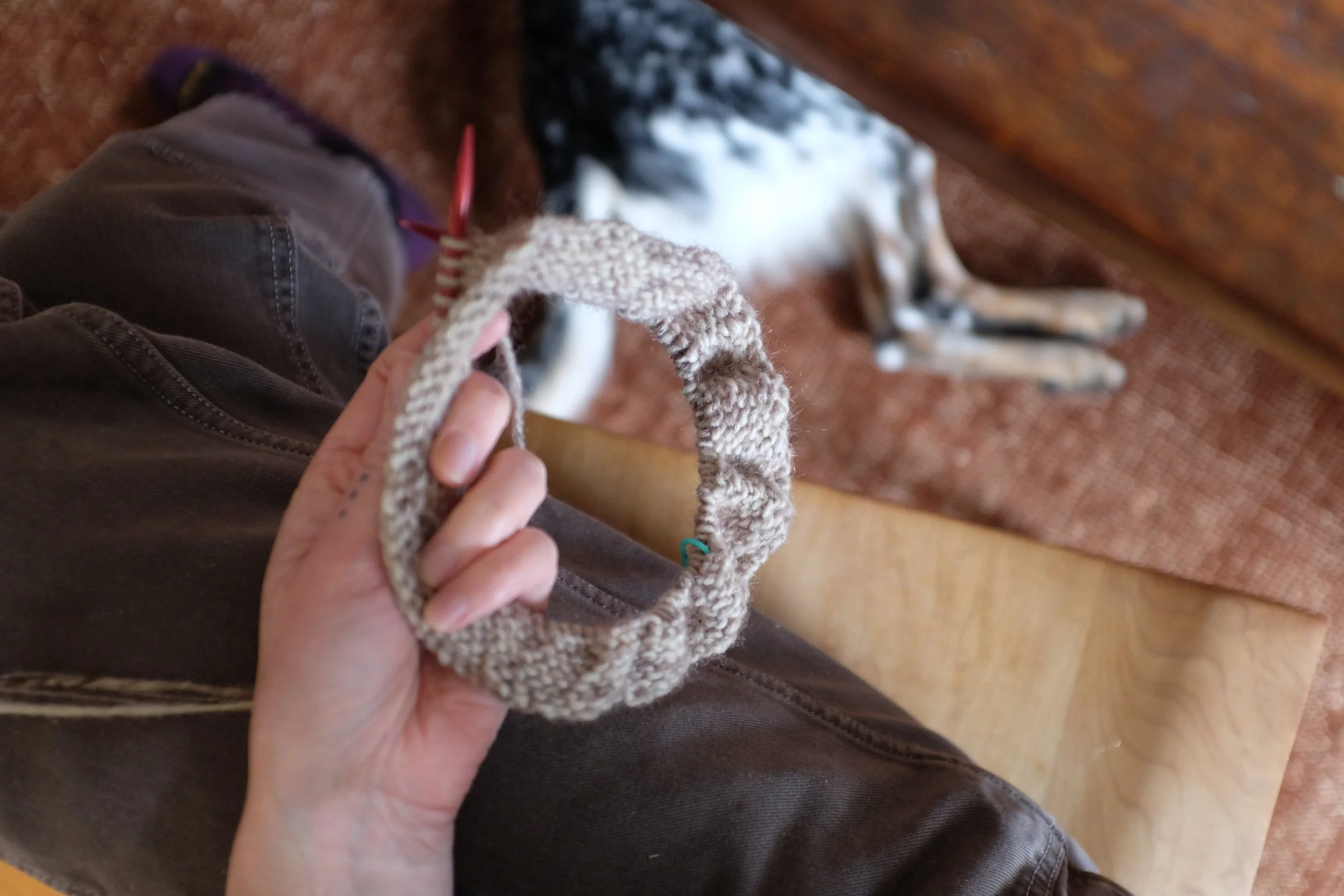
Cast on 88 stitches onto circular needles using preferred stretchy cast on method. Long tail cast on is an unfussy option here.
Place marker and join by beginning to knit in the round.
Knit for about 6.5” in stockinette stitch (or about 39 rounds).
At the next round, place a stitch marker as you knit around after every 11 stitches. You will now have a total of 8 stitch markers on your needles. Your first stitch marker you placed at your cast on row will count as one of these markers.
You will now begin a series of decrease rows. These are called decrease round a and b. You will repeat them until 8 stitches (if you cast on 88 stitches) remain. If you cast on 77, you will repeat this decrease round set until 7 stitches remain.
* * Decrease round A: Knit until 2 stitches remain before a stitch marker and knit these two stitches together (k2tog). Continue this pattern with each pair of stitches before each marker.
Decrease round B: Knit full round with no decreases * *
Repeat from * * to * * until 8 stitches remain (if your original cast on amount was 88), switching to DPNs when the work feels too tight of a reach on the ciruclar needles.
Knit these remaining (8 for 88 CO, 7 for 77 CO etc.) stitches for a total of 5 rounds to make your little fritillaria sprout.
On the 6th round you can bind off in your preferred method, or break the yarn and thread it onto a tapestry needle and run it thorugh the remaining live stitches.
Weave in ends.
Block if the fibers feel like they need to relax, or if you have a yarn you’d like to see bloom.
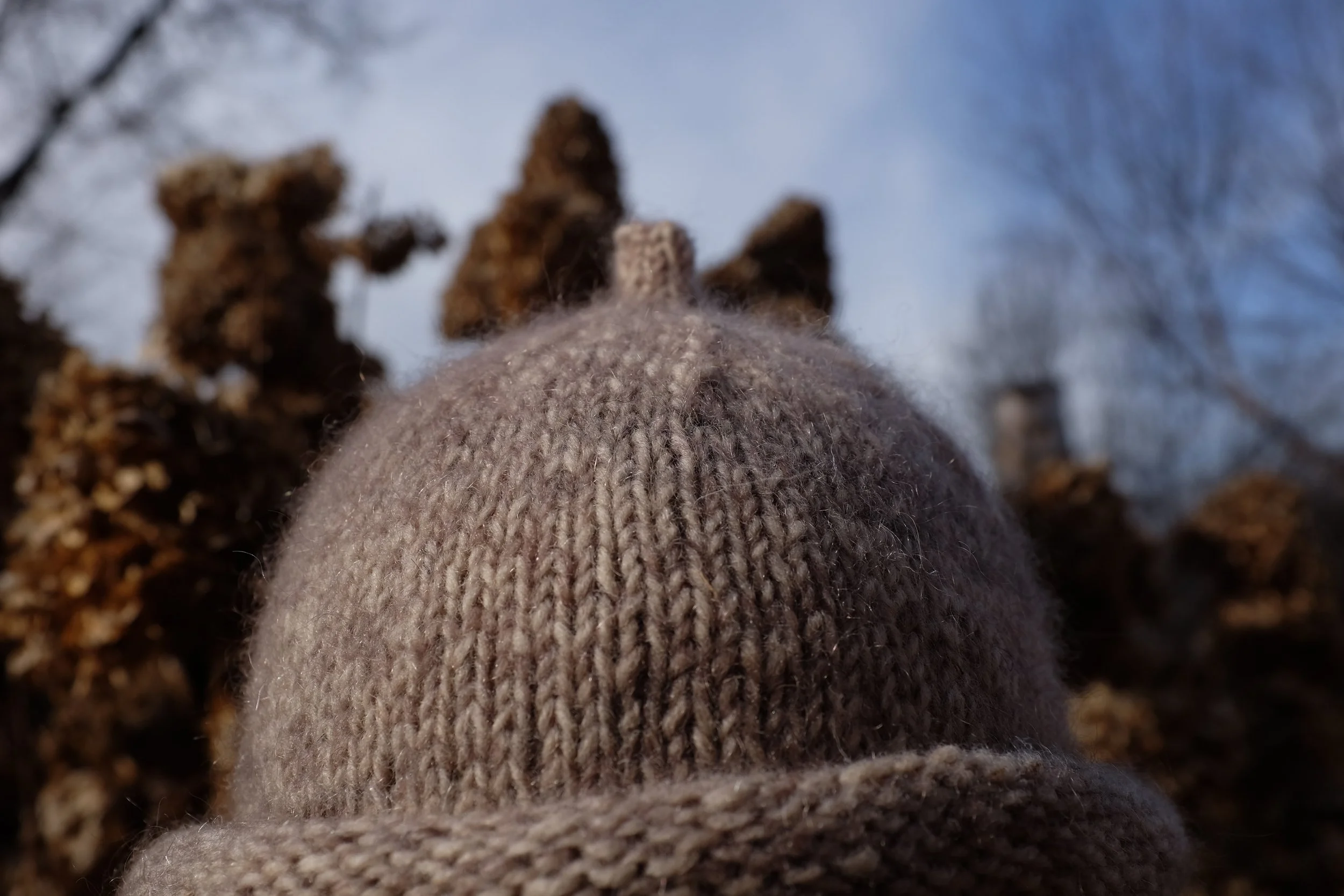
Wear proudly as you march (April, May) into Beltane.